
Have you ever left a chiropractic visit feeling better, and then a few days later felt the same pain creep right back in?
If that has happened to you, you are not imagining it, and it does not mean chiropractic care cannot help you; it’s actually something much simpler. You received a single adjustment, but not a series of adjustments that lead to correction. Those are two very different things, and most patients have not had the difference explained.
What an adjustment actually does
An adjustment is a single action in a single moment. A chiropractor moves a joint that is not working the way it should, and for a while, things feel better. Pain eases. Movement comes back. That relief is real, and it matters.
But an adjustment on its own is a snapshot, not a complete solution. It changes how your spine is functioning today. It does not necessarily change the pattern that your body has been working against, sometimes for many years. The pain returns. You go back in. You feel better again. And the cycle starts over.
For a lot of people, that cycle becomes “just how it is.” You stop expecting anything more, and after enough years of that, you can begin to lose hope that anything will actually hold.
What a correction is instead
Correction starts from a different question. Instead of asking what hurts right now, it asks why this got here in the first place.
Every problem has a cause, and our job is to find it. We are spinal detectives and never guess about your health. At Atlas, that search starts at the top of your spine, with a single bone called the Atlas, the top vertebra at the base of your skull.
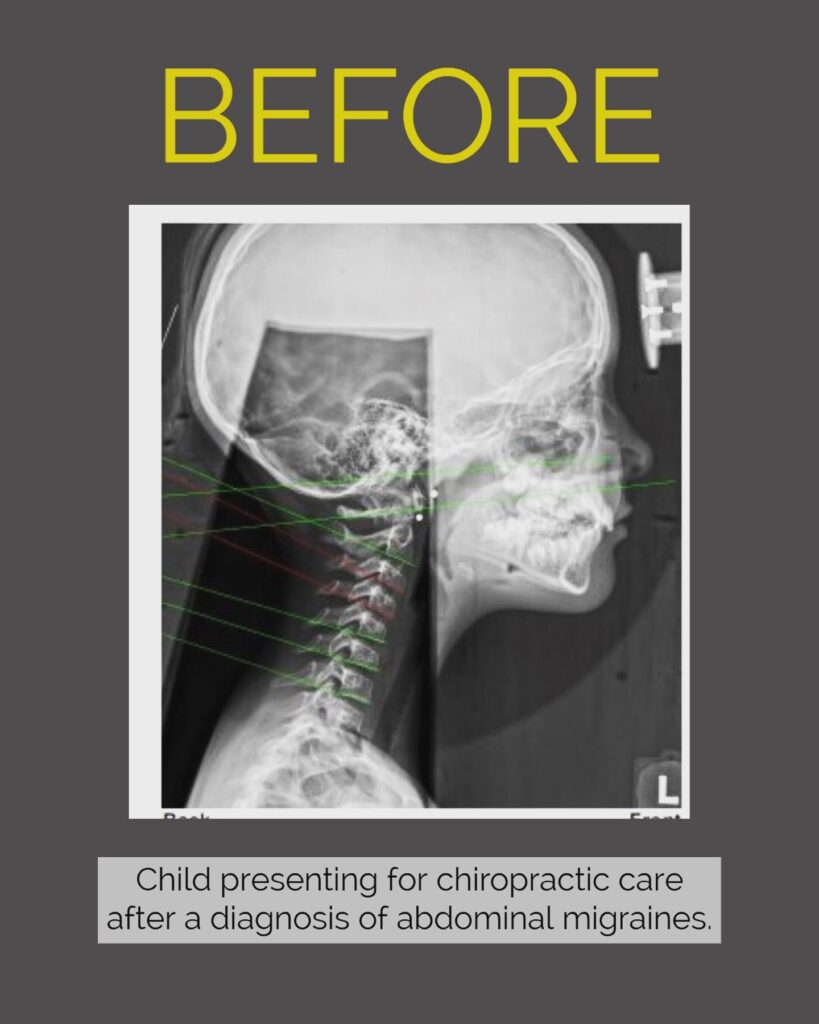
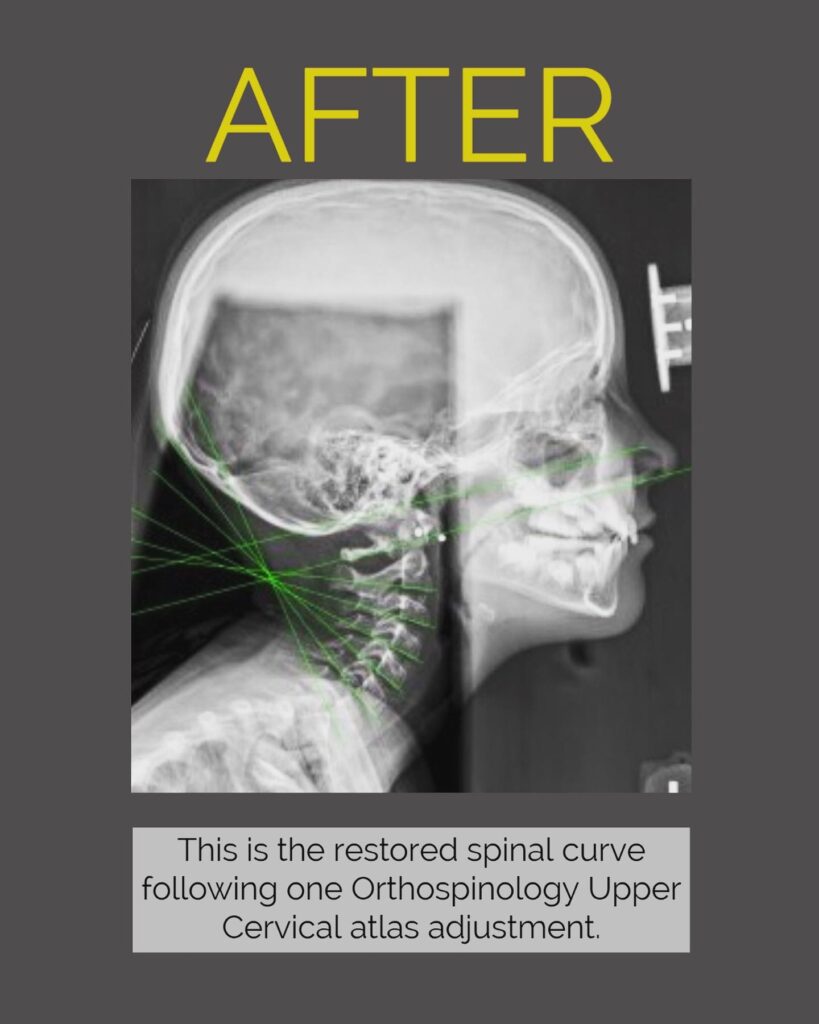
The Atlas surrounds and protects your brainstem, the communication pathway between your brain and everything your body does without you thinking about it. Balance. Sleep. Digestion. Healing. When the Atlas shifts even slightly out of position, the rest of your body compensates to keep your eyes level and your head upright. One shoulder rides higher. A hip shifts up as continued compensation. The natural curve in your neck flattens out. Muscles on one side work harder than the muscles on the other, every hour of every day.
That compensation is where most recurring pain digs in and becomes stubborn. It is also why the pain so often comes back to the same spot no matter how many times that spot gets treated. The place that hurts and the place that caused it are frequently not the same place.
Why precision changes the outcome
Correcting the Upper Cervical spine (the top three segments of your neck) is not a matter of more force or more frequent visits. It is a matter of accuracy.
Orthospinology, the technique we use at Atlas, is a mathematically based Upper Cervical method developed to calculate exactly how a specific Atlas has shifted for a specific person, and exactly what it will take to bring it back. The correction is gentle. There is no twisting of the neck and no forceful popping. When a correction is precise, it tends to hold longer, which means fewer adjustments over time rather than more.
What this means for you
If you have been getting adjusted for years and the relief keeps expiring instead of building over time, that is worth taking seriously. Not as a sign that you are broken or that you have simply aged into this, but as information. Something upstream is unresolved, and it has not been found yet.
Correction takes longer than an adjustment. It asks more of you, and it is not the right answer for every person who walks through our door. When we do not believe we are the best ones to help you, we will tell you so and point you toward someone who is.
But when the cause is found and held, what changes is not just your pain level. It is your sense that you can plan things again. That you can pick up your kids, sit through a workday, take the trip, and feel like yourself again.
If you have been living inside the relief-and-return cycle and you are ready to find out what is underneath it, we would welcome the chance to take a look. Your consultation at Atlas is complimentary. It is a conversation, and you will leave it knowing more than when you came in.
This is the kind of expertise you would otherwise have to travel hours to find, in a small-town practice where people know your name.
Reviewed by Dr. Christy Flick, DC · Last reviewed August 2026
This article is for educational purposes and shares general information about upper cervical chiropractic care. It isn’t a substitute for an individual clinical assessment, and results vary from person to person. If you’re wondering whether this could be the source of what you’re dealing with, we’d welcome the chance to take a look — schedule a complimentary consultation at atlaschiropracticwaco.com or call 254-304-7474.
About the Author